
How Government Immigration Policy Drives Slum-Like Overcrowding
Policy Failures: How mismanaged immigration forces impoverished overcrowding
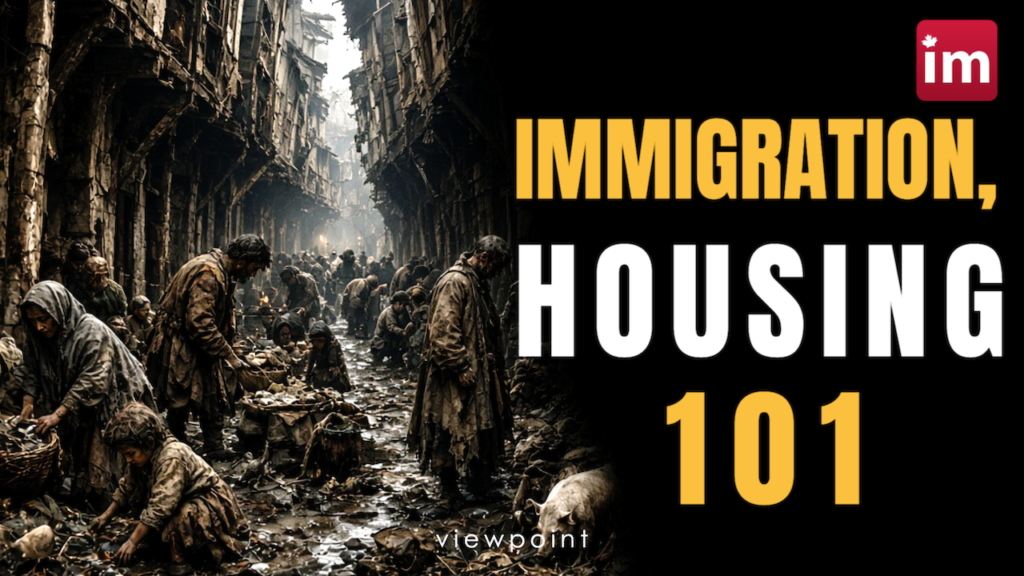
Canada’s housing crunch did not appear out of thin air. Temporary and permanent immigration ran far ahead of housing supply for years, packing more people into the same limited stock of homes and driving up both rents and overcrowding. Local governments responded by pushing densification, but that mostly meant cramming more bodies into existing neighbourhoods rather than fixing the root mismatch.
Look at the numbers. Non-permanent residents, mainly international students and temporary workers, peaked at nearly 3 million people, or 7.2 per cent of the population, in late 2024. By July 1, 2026, Statistics Canada counted 2.78 million still here, or 6.7 per cent. That is down, but still well above the federal target of under 5 per cent by the end of 2027. Permanent resident admissions hit records near 485,000 in 2024 before being dialled back. The current plan stabilizes them at 380,000 a year from 2026 through 2028, while new temporary arrivals are capped at 385,000 in 2026 (155,000 students and 230,000 workers) and 370,000 after that. Those cuts came late. Between 2022 and 2025 the population jumped by roughly 2.8 million, almost entirely from immigration streams.
The housing impact was predictable and severe. Temporary residents concentrate heavily in rental markets, especially around colleges and universities in Ontario and British Columbia. In places like Brampton, earlier data showed over 60 per cent of international students living in unsuitable housing under national occupancy standards. Detached homes in Kitchener, Waterloo, North Bay and similar towns were converted into de facto rooming houses. Four students could outbid a family for a three-bedroom unit. Vacancy for larger family-sized rentals stayed painfully tight at 1.4 per cent even as overall purpose-built vacancy rose to 3.1 per cent. Core housing need still affected 1.8 million households in 2024, with renters at 22 per cent. Suitability, meaning enough bedrooms, was a key factor.
Affordability numbers tell the same story. The average home price sat near $675,000 in mid-2026. Vancouver required 12.3 times median household income. Toronto sat at 9.3 times. Ownership costs consumed 52.8 per cent of median income nationally. CMHC says the country needs 417,000 to 469,000 new homes yearly to restore earlier affordability levels. Starts remain far below that. Rents have finally eased, with average asking rents at $2,034 in September 2026, down 4.2 per cent year over year, partly because temporary inflows slowed. But the damage from the earlier surge lingers.
Local governments have treated densification as the main solution. British Columbia ended single-family zoning and forced multiplexes of three to six units on former single lots. Edmonton’s 2024 bylaw allowed up to eight units and dropped parking minimums. The federal Housing Accelerator Fund rewarded the same approach. In practice this produced more small units and more pressure on streets, sewers and schools. Alberta ordered Edmonton to roll back those rules in October 2026, citing forced density and neighbourhood strain. Calgary had already reversed course. In student-heavy markets the new density often meant more overcrowding rather than relief for Canadian families.
The critical point is straightforward. Governments allowed temporary and permanent inflows to expand far beyond what housing, infrastructure and services could absorb. Then, governments simply rely on high-density micro-housing to solve affordable housing shortages; overcrowding becomes the predictable outcome, especially as incomes lag far behind soaring prices. Ultimately, forcing citizens to live smaller and closer together erodes urban safety and severely damages the overall quality of life.