
Delinquency rates are climbing fastest in the GTA
From Toronto to Brampton, families feel the pressure as pandemic-era low rates disappear.
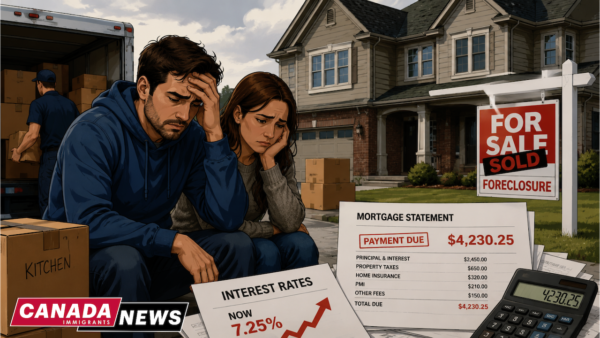
If you own a home in one of Canada’s big cities, you might be feeling the pinch right now. Mortgage delinquencies are climbing, though they are still pretty low compared to historical levels. It’s not a full-blown crisis yet, but the numbers are worth watching, especially in places like Toronto, Vancouver, and Brampton. According to recent data from Equifax and CMHC, the national 90-day-or-more delinquency rate hit about 0.24 percent in late 2025, up from 0.21 percent the year before. That might sound tiny, but it adds up across millions of mortgages. Ontario and British Columbia are driving much of the increase. In Toronto, the rate jumped from 0.15 percent in Q2 2024 to 0.24 percent in Q2 2025. Brampton stands out even more, hitting around 0.6 percent in Q4 2025, more than double the national average. Vancouver and other hot markets are seeing similar stress.
The big cause is the mortgage renewal wave. Tons of homeowners who locked in super-low rates during the pandemic are now renewing at much higher ones. Payments can jump 30 percent or more, hitting budgets hard. High household debt from expensive housing plays a role too, along with the cost of living crunch, groceries, insurance, and everything else going up. In cities like Toronto, investor properties are struggling with rising carrying costs and softer rents, leading to negative cash flow. A softer job market in some areas does not help either. Pandemic buyers with high loan-to-income ratios are especially vulnerable when rates reset.
For families, missing payments tanks credit scores and can lead to power-of-sale proceedings where lenders force the home to sell. In Brampton, one in every 20 homes has been listed as a power sale lately. That adds inventory to the market and can put downward pressure on prices in certain neighborhoods. Broader effects include more financial strain spilling into credit cards and other debts. If things worsen, it could ripple through the housing market and even worry financial regulators about stability, though banks say over 99 percent of mortgages are still current.
Experts expect delinquencies to keep rising into 2026 as more renewals hit, especially in expensive cities. Toronto could see rates climb toward 0.34 percent by year-end. Still, Canada has strong mortgage rules and low overall arrears compared to many countries, so a 2008-style meltdown looks unlikely.
Homeowners are tightening belts, refinancing where possible, or even selling before trouble hits. For buyers, it might create opportunities in certain pockets, but affordability remains tough. The situation shows how sensitive our housing market is to interest rates and economic bumps. For a deeper look at the underlying facts and contextual data driving this analysis, see the Backgrounder below.
BACKGROUNDER
If you’re watching the GTA housing scene, Toronto and Brampton show some clear differences in mortgage stress right now. Both spots feel the heat from higher rates and renewals, but Brampton is hurting a lot more.
In Q4 2025, Brampton’s 90-day+ delinquency rate hit 0.6 percent, the highest among bigger Canadian cities. That’s more than double the national average of around 0.24-0.26 percent. Toronto came in at about 0.29 percent for the same period, still elevated but less than half of Brampton’s rate.
Go back a bit for context. In Q2 2025, Toronto sat at 0.24 percent (up sharply from 0.15 percent a year earlier). Brampton has consistently led the surge in the region. Pre-pandemic in 2019, Brampton was super low at just 0.06 percent, way below the national figure. Now it’s flipped and sits well above.
Brampton’s rate has climbed faster and higher. Equifax and CMHC data point to Brampton, along with parts of the GTA like Markham and Oshawa, as key drivers of Ontario’s overall increase. Toronto drives absolute numbers because of its size, but the intensity hits harder in Brampton.
Both cities deal with the same big causes: pandemic-era buyers renewing at much higher rates, with payments jumping 30 percent or more. High home prices, cost-of-living pressure, and softer job markets add fuel. But Brampton feels it extra because of:
- More highly leveraged buyers and investor properties with tighter cash flow.
- Higher concentration of mid-range mortgages ($800k-$1M range) that get slammed hardest by rate resets.
- Local economic hits, like manufacturing slowdowns.
Toronto has more diverse economies and higher-income households that buffer some of the pain, though it’s not immune. In Brampton, this stress shows up fast in the market. One in every 20 homes listed is a power-of-sale, a big jump from past years. Forced sales add inventory and can pressure prices in certain pockets. Power-of-sale activity hit a 10-year high in 2025.
Toronto sees rising delinquencies too (they’ve more than quadrupled from post-pandemic lows in some reports), but the impact spreads out more across a massive market. Credit scores take hits in both places, and families cut spending elsewhere. Banks still report over 99 percent of mortgages current overall, so no meltdown, but the trend worries folks heading into more renewals in 2026.
Some expect more pressure into 2026 as renewals continue, with Toronto and the broader GTA remaining hotspots. Brampton looks especially vulnerable and could see higher forced sales if rates don’t drop enough or jobs stay shaky.