More Mexicans Deported from Canada | Annual Removals
In 2025, Mexicans were the single largest national origin group deported from Canada.
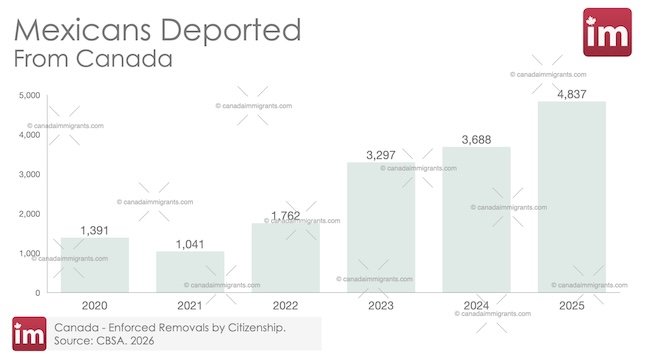
- In 2025, a total of 23,160 foreign nationals were deported from Canada, and Mexicans accounted for 20.1% of all deportations.
- From 2020 to 2025, 16,016 Mexicans were deported from Canada.
- The Canada Border Services Agency (CBSA) enforces removals of foreign nationals found inadmissible under the Immigration and Refugee Protection Act. Mexicans have consistently ranked among the top nationalities for enforced removals in recent years, often in first or second place alongside Indians. Removals primarily involve administrative cases rather than serious criminality.
Main Reasons for Removals
The vast majority of removals, including for Mexicans, stem from non-compliance under section 41, particularly failed or abandoned refugee claims. Breakdown of overall inadmissibility reasons (applicable across nationalities):
- Non-compliance (refugee claimants): Dominant category, often 70-80 percent or more of total removals in recent years (e.g., 19,225 in 2025).
- Non-compliance (non-claimants): Overstays, failed extensions.
- Criminality (section 36): Smaller share (934 in 2025).
- Other: Misrepresentation, organized crime (low single or double digits for most years).
For Mexicans specifically:
- Many enter as visitors or temporary workers (e.g., seasonal agricultural programs) and file asylum claims citing cartel violence or general insecurity.
- Canada generally considers Mexico a safe democratic country, leading to low acceptance rates for Mexican refugee claims (historically under 20-30 percent, with high rates of withdrawal/abandonment).
- Failed claimants receive a removal order and must leave. Non-compliance turns departure orders into deportation orders.
- Logistics favor quicker removals to Mexico due to proximity, direct flights, and government cooperation on travel documents.
Serious criminals are prioritized, but they form a minority of total Mexican removals. Most cases are administrative.
SOURCE: CBSA 2026