Mexican Cartels and Biker Gangs Crushed in Manitoba
Police seize record haul tied to Mexican cartels, Hells Angels and Wolfpack network.
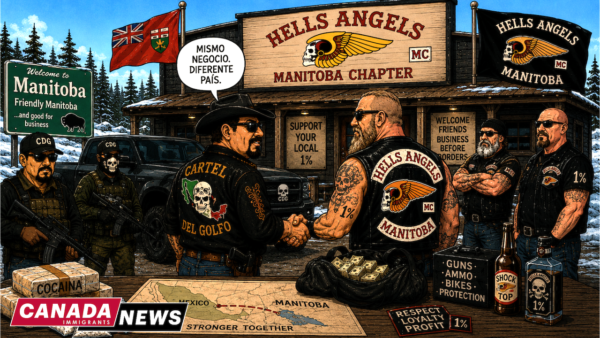
Winnipeg police announced on May 20, 2026, that they had dismantled what authorities described as a sophisticated criminal network linked to Mexican cartels, the Hells Angels and the Wolfpack Alliance in the largest drug seizure in Manitoba history. The two year investigation resulted in the arrest of 33 people and the seizure of illicit drugs with an estimated street value of more than $37 million.
The investigation began in May 2024 when the Winnipeg Police Service Organized Crime Unit launched a probe into the importation of cocaine, methamphetamine and fentanyl into Winnipeg. Investigators alleged the drugs were being trafficked from the United States before being warehoused in Alberta and Ontario and then distributed throughout Manitoba and northwestern Ontario.
Police said the organization operated through multiple trafficking cells working under a single umbrella structure connected to upper levels of organized crime in Canada and abroad. Authorities alleged the network had ties to the Hells Angels motorcycle gang, the Wolfpack Alliance and Mexican cartels. Investigators also claimed the criminal group exerted significant control over the distribution of illegal drugs in Manitoba and neighbouring regions.
During the operation, officers seized large quantities of methamphetamine, cocaine and fentanyl, along with 14 firearms, approximately $825,000 in cash and 1.35 million illegal cigarettes. Police laid 174 charges related to drug trafficking, conspiracy and proceeds of crime offences.
Authorities said drugs were transported into Manitoba using commercial trucking, courier services, private vehicles with hidden compartments and mail delivery systems. The investigation involved multiple law enforcement agencies over nearly two years and concluded in March 2026.
The case follows earlier major organized crime investigations in Manitoba. In March 2022, Manitoba RCMP announced Project Divergent, a four year investigation into international drug and weapons trafficking networks connected to the Hells Angels. That investigation led to 22 arrests and seizures exceeding $70 million in illicit drugs, including cocaine, methamphetamine and fentanyl. Authorities at the time said the operation stretched from Manitoba to Ontario, British Columbia, Colombia, Greece and the United States.
Police and security experts have long warned that Canadian organized crime groups increasingly collaborate with transnational cartels to move drugs across borders and into regional markets. The latest Manitoba investigation underscores concerns about the growing sophistication of criminal networks operating in Western Canada and the scale of fentanyl trafficking linked to international suppliers. For a deeper look at the underlying facts and contextual data driving this analysis, see the Backgrounder below.
BACKGROUNDER
Canada has become an increasingly important hub in transnational organized crime networks tied to drug trafficking, money laundering, weapons smuggling, and synthetic narcotics production. Law enforcement agencies across the country have reported growing cooperation between domestic gangs and international criminal organizations, including Mexican cartels, Chinese organized crime groups, South American trafficking networks, and outlaw motorcycle gangs.
Recent investigations suggest that criminal groups are becoming more sophisticated, decentralized, and technologically advanced. These networks often operate across multiple provinces while maintaining connections with suppliers and financial facilitators abroad.
Mexican Cartel Connections
Canadian police agencies have repeatedly identified links between Mexican cartels and criminal organizations operating in Canada. Cartels associated with fentanyl trafficking, cocaine distribution, and methamphetamine production have allegedly collaborated with Canadian street gangs and biker groups to expand distribution routes.
Investigators have pointed to partnerships involving transportation logistics, money laundering operations, and bulk narcotics imports through ports, border crossings, and commercial trucking systems. Western Canada has experienced increased concern regarding cartel-linked fentanyl trafficking, particularly in British Columbia and Alberta.
In several major investigations, authorities alleged that cartel representatives worked indirectly through intermediaries instead of maintaining highly visible operations inside Canada. This structure helps shield cartel leadership while allowing Canadian affiliates to manage local distribution.
Hells Angels and Organized Crime Alliances
The outlaw motorcycle gang Hells Angels remains one of the most influential criminal organizations in Canada according to multiple police intelligence reports. Law enforcement agencies have alleged that the group continues to play a central role in narcotics distribution, debt collection, extortion, and organized trafficking operations.
Authorities have also reported increasing collaboration between biker gangs and ethnically diverse street gangs. These alliances are often based on profit-sharing arrangements rather than strict territorial control.
In Manitoba, police recently announced what they described as the largest drug seizure in provincial history. Investigators alleged that the network involved links to Mexican cartels, the Hells Angels, and the Wolfpack Alliance. The case highlighted the growing complexity of organized crime partnerships operating across provincial and international borders.
The Wolfpack Alliance
The Wolfpack Alliance has frequently been identified by police as a major organized crime network based primarily in British Columbia. Authorities allege that the group functions as a flexible coalition of traffickers, financial operators, and gang associates connected to international smuggling networks.
Unlike traditional gangs with rigid hierarchies, the Wolfpack model allegedly relies on temporary alliances and business-style relationships. This structure allows the organization to cooperate with various criminal groups simultaneously, including Asian organized crime syndicates, biker gangs, and international narcotics suppliers.
Police investigations and media reports have linked the organization to high-level cocaine imports, money laundering operations, and targeted violence connected to disputes within the drug trade.
Synthetic Drugs and Fentanyl Production
Canada has faced growing concerns regarding domestic fentanyl and methamphetamine production. Criminal organizations increasingly rely on clandestine laboratories capable of producing large quantities of synthetic drugs using precursor chemicals imported from overseas.
Authorities have identified China as a significant source of chemical precursors used in fentanyl production, although international regulations and enforcement efforts have evolved in recent years. Criminal groups often exploit online marketplaces, encrypted communications, and shell companies to conceal supply chains.
British Columbia remains at the center of Canada’s fentanyl crisis. Public health officials and law enforcement agencies continue to warn that synthetic opioids are driving overdose deaths across the country.
Money Laundering and Financial Networks
Drug trafficking organizations operating in Canada rely heavily on money laundering systems to move profits internationally. Investigators have identified methods involving casinos, real estate transactions, cryptocurrency transfers, underground banking systems, and cash smuggling.
The so-called “Vancouver Model” became widely discussed after investigations alleged connections between organized crime, casino cash transactions, and transnational laundering networks tied to Asian criminal groups.
Financial intelligence experts argue that modern organized crime networks increasingly function like multinational businesses. They employ legal professionals, financial facilitators, and digital technologies to disguise illicit proceeds.
Border Security and Law Enforcement Challenges
Canadian authorities continue to face significant challenges combating transnational organized crime. Large geographic borders, major shipping ports, and extensive transportation infrastructure create opportunities for smuggling operations.
Law enforcement agencies have increasingly relied on joint task forces involving the Royal Canadian Mounted Police, municipal police departments, border services, and international partners such as the Drug Enforcement Administration.
Encrypted messaging platforms, decentralized gang structures, and international financial systems have made investigations more difficult. Police agencies also face challenges gathering evidence across multiple jurisdictions with differing legal systems.
In sum, recent investigations demonstrate that organized crime in Canada is increasingly international in scope. Criminal networks linked to Mexican cartels, biker gangs, Asian organized crime groups, and domestic alliances have expanded their cooperation in pursuit of profits from narcotics trafficking and financial crime. Authorities continue to adapt enforcement strategies, but organized crime groups remain highly flexible and resilient. The combination of synthetic drugs, international supply chains, and advanced laundering systems ensures that transnational organized crime will remain a major security and public health concern in Canada for years to come.