
Mark Carney Airport Sale Plan: Privatizing Canada’s Skies for Profit
From Goldman Sachs to Brookfield to Ottawa Carney’s latest move to privatize airports risks turning public assets into cash machines for corporations.
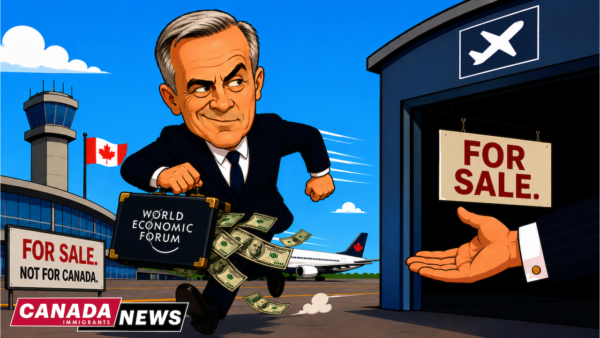
Prime Minister Mark Carney is floating plans to sell or privatize major Canadian airports, and the whole thing smells like another elite handout dressed up as economic genius. In recent comments and the spring economic update, Carney’s government is talking about “unlocking the full value” of federally owned airports to free up capital for other projects and pump money into a new sovereign wealth fund. Sounds fancy until you realize it probably means higher fees for travellers and big profits for private operators.
Carney told reporters in Quebec that his team wants airports to “better serve Canadians” while redeploying tied-up public money into growth ventures. He even signalled Canada is “wide open to foreign investment.” Translation: get ready for foreign buyers and pension funds to snap up pieces of Pearson, Trudeau, and other key hubs. This idea first popped up in his fall budget but gained traction lately as the Liberals hunt for cash without raising taxes outright.
Here is the problem. Airports are natural monopolies. Once private players own them, the incentive is simple: jack up landing fees, retail prices, and passenger charges to maximize returns. We have seen this movie before in other countries. Privatized airports often deliver shinier terminals for a while, but everyday flyers pay more while service quality eventually slips. Canadians already gripe about expensive air travel. This move risks making it worse.
Critics rightly point out that these airports were built with public money and serve a public purpose. Handing them to corporations, especially foreign ones, hands over strategic infrastructure that matters for national security and connectivity. Carney’s banker background shines through here. He sees assets on a balance sheet, not vital public gateways that keep remote communities linked and tourism humming.
This airport sale talk perfectly fits Carney’s long-standing pattern of treating publicly built assets as personal piggy banks. These airports were constructed with taxpayer dollars over decades. Now Mark Carney wants to hand them over to private corporations and foreign investors so he can fund his pet projects and sovereign wealth fund fantasies. His government keeps eyeing valuable public infrastructure for privatization while repeatedly promising everything will magically improve for ordinary Canadians.
Canadians should be deeply skeptical. Before any deal is rammed through, there must be complete transparency on inevitable fee hikes, foreign ownership limits, and actual protections for travellers. Selling off infrastructure that generations of taxpayers paid to build in order to enrich private operators rarely ends well for regular people. Carney’s banker instincts are showing once again. Keep your boarding passes handy. This flight is headed for major turbulence. For a deeper look at the underlying facts and contextual data driving this analysis, see the Backgrounder below.
BACKGROUNDER
Mark Carney’s Privatization History: A Banker’s Track Record
Mark Carney has a long resume tied to privatization efforts, shaped by his years as an investment banker and senior public servant before entering politics. Critics often paint him as pro-privatization due to this background, while supporters see it as pragmatic asset management and attracting private capital. Here is a factual breakdown of his key involvements.
Early Banking Career at Goldman Sachs
In the late 1990s and early 2000s, Carney worked as an investment banker at Goldman Sachs. He played a role in the first attempted privatization of Ontario’s Hydro One, the province’s public electricity utility. This effort aimed to sell off parts of the publicly owned hydro system but faced significant political and public opposition at the time. It highlighted Carney’s early involvement in structuring deals to transfer public infrastructure to private hands.
Federal Finance Department and Petro-Canada (2004)
As a senior official in Canada’s Department of Finance, Carney oversaw the sale of the government’s remaining 18.6% stake in Petro-Canada, completing its full privatization. Originally a Crown corporation created in the 1970s for energy security, Petro-Canada was gradually sold off. Carney helped execute the final share sale during a global oil boom, which delivered strong returns to taxpayers. Critics, especially on the left, still cite this as an example of him facilitating the handover of a strategic public energy asset to private (and often foreign) investors, arguing it contributed to higher gas prices over time.
Brookfield Asset Management (2020–2025)
After serving as Governor of the Bank of Canada (2008–2013) and the Bank of England (2013–2020), Carney joined Brookfield Asset Management as Vice Chair and later Chair, focusing on ESG (Environmental, Social, Governance) and impact investing. Brookfield is a massive global infrastructure investor known for acquiring and managing privatized assets like utilities, toll roads, ports, renewable energy, and real estate. While Carney’s role emphasized “transition investing” toward net-zero goals, his association with the firm fuels ongoing accusations of conflicts of interest, especially as his government now explores privatizing Canadian airports and other public assets. He stepped down from Brookfield in early 2025 before fully entering politics.
As Prime Minister (2025–present)
In power, Carney’s government has actively floated airport privatization (or “alternative ownership models”) to “unlock value,” redeploy capital, and fund initiatives like a sovereign wealth fund. This includes openness to foreign investment in major hubs like Toronto Pearson. The push echoes his earlier career philosophy: treating public infrastructure as underutilized assets that private operators could run more efficiently.
Carney consistently views privatization or public-private partnerships as tools for efficiency, investment attraction, and fiscal flexibility—especially during periods of high public debt or economic pressure. Detractors argue this reflects a banker’s worldview that prioritizes markets over public control of strategic assets. His history makes the current airport debate particularly contentious, as it aligns directly with decades of his professional experience in finance and infrastructure.