
Temporary Foreign Workers Flood Canada’s Trucking Industry
How TFWP quietly rewired the entire trucking business model.
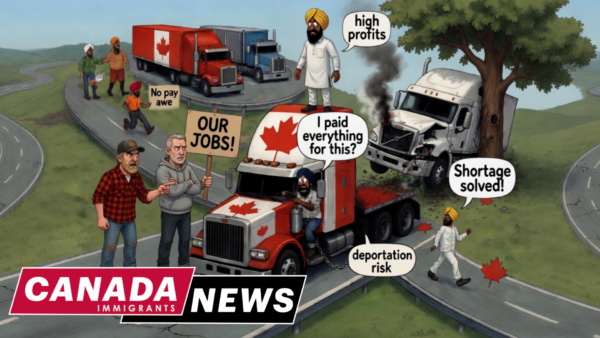
Look around any Canadian highway these days and you will spot more and more big rigs driven by temporary foreign workers. The numbers do not lie. According to a fresh Teamsters Canada report from April 2026, Labour Market Impact Assessment approvals for truck drivers under the Temporary Foreign Worker Program jumped from about 2,000 in 2010 to over 8,500 in 2024. That is more than a fourfold increase. Truck driver approvals now make up nearly 3.6 percent of all LMIA approvals across every sector, up from just 1.4 percent back in 2010. British Columbia, Alberta and Ontario lead the pack, with some single companies raking in hundreds of permits a year. This is not a short-term fix for a labour crunch. It is a full-blown business strategy.
Here is the kicker. Canadian drivers have been bailing out of trucking for years because wages have barely budged while conditions have gotten worse. Long hauls, unpredictable schedules, no overtime pay, sketchy equipment and nights away from home add up to burnout. Instead of fixing that mess by paying decently or offering real benefits, many carriers simply turn to the TFWP. They get cheap, loyal labour tied to one employer. The workers cannot easily switch jobs or complain without risking deportation. It is a perfect setup for keeping costs low and profits high.
Now add the recruitment scam on top. Charging foreign workers illegal fees for these jobs is flat-out banned, yet it happens constantly. Reports from trucking associations in Manitoba and Alberta describe newcomers forking over $25,000 to $60,000 for a shot at an LMIA and a work permit. Some cases hit $75,000. Desperate drivers from overseas borrow huge sums or drain family savings, then land here in debt before they even turn a wheel. Once they start, the exploitation rolls on: wage theft, forced unpaid hours, substandard trucks and the shady Driver Inc. model that treats them like contractors to dodge labour rules. The United Nations has called Canada’s TFWP a breeding ground for modern slavery, and trucking is exhibit A.
Critics keep saying there is a driver shortage. Sure, if you define shortage as companies refusing to raise pay or improve life on the road. Temporary foreign workers are not the villains here. They are the ones getting squeezed hardest. Meanwhile Canadian drivers get undercut, and the whole industry slides toward lower standards. Until bosses are forced to compete fairly instead of gaming the system with vulnerable migrant labour, the roads will keep filling with overworked, underpaid drivers who paid a fortune just to get here. It is not solving a shortage. It is creating a permanent underclass on wheels. For a deeper look at the underlying facts and contextual data driving this analysis, see the Backgrounder below.
BACKGROUNDER
The Temporary Foreign Worker Program did not always flood Canadian highways with temporary truck drivers. Back in 1973 when Ottawa launched TFWP it was aimed at high-skilled folks like engineers and execs plus a couple of low-skill niches like seasonal farmhands and live-in caregivers. Trucking barely registered. Then came the 2002 Low-Skill Pilot Project. Suddenly employers could tap foreign labour for transportation jobs that needed little formal training. Truck driving fit the bill perfectly. That pilot cracked the door wide open.
Deregulation had already set the stage. The 1987 Motor Vehicle Transport Act slashed costs for shippers but hammered driver conditions with longer hours and weaker rules. By the early 2000s a so-called shortage was brewing because Canadians were walking away from the grind. Instead of fixing pay or schedules bosses turned to the new low-skill stream. Permits stretched to 24 months by 2006 and an expedited pilot in Alberta and British Columbia in 2007 made approvals lightning fast. Numbers crept up through the 2000s.
Then the 2014 overhaul tried to slam the brakes. Government slapped a 10 percent cap on low-wage foreign hires per company raised fees and added extra checks to stop abuse. Approvals for truck drivers plunged from over 5,000 in 2012-2013 to barely 1,000 a year by 2016-2018. It looked like the program might shrink. But the rebound was swift. By 2015-2019 transport truck drivers made up 36 percent of the entire net growth in low-skill TFWP entries outside agriculture and caregiving. A 2021 study nailed it: employers had figured out how to game the system for cheaper labour.
Fast-forward to the numbers we have now. Teamsters Canada crunched federal data and found LMIA approvals for truck drivers (NOC 7511) more than quadrupled from roughly 2,000 in 2010 to 8,500-plus in 2024. They jumped from 1.4 percent of all LMIAs to 3.6 percent. British Columbia Alberta and Ontario led the charge with some outfits pulling in hundreds of permits a year. H&R Transport alone racked up 775 between 2010 and 2017. Westcan Bulk grabbed 555 in just a few years. This was no emergency patch. It became standard operating procedure.
Here is the pattern critics keep hammering. Every time wages stagnate and conditions stay lousy Canadian drivers bail. Companies cry shortage then import tied labour that cannot jump ship without risking deportation. The TFWP was sold as a last resort. In trucking it morphed into a permanent low-cost strategy that lets bosses dodge real fixes like better pay rest rules or treating driving like the skilled trade it is. The roads got busier with foreign rigs while domestic talent kept disappearing. Until Ottawa stops letting the program paper over industry problems the cycle will just keep rolling.